Your feature profile
Live measurements · example portrait
Measuring the example…
Six dimensions show how your photo’s measurements fit together.
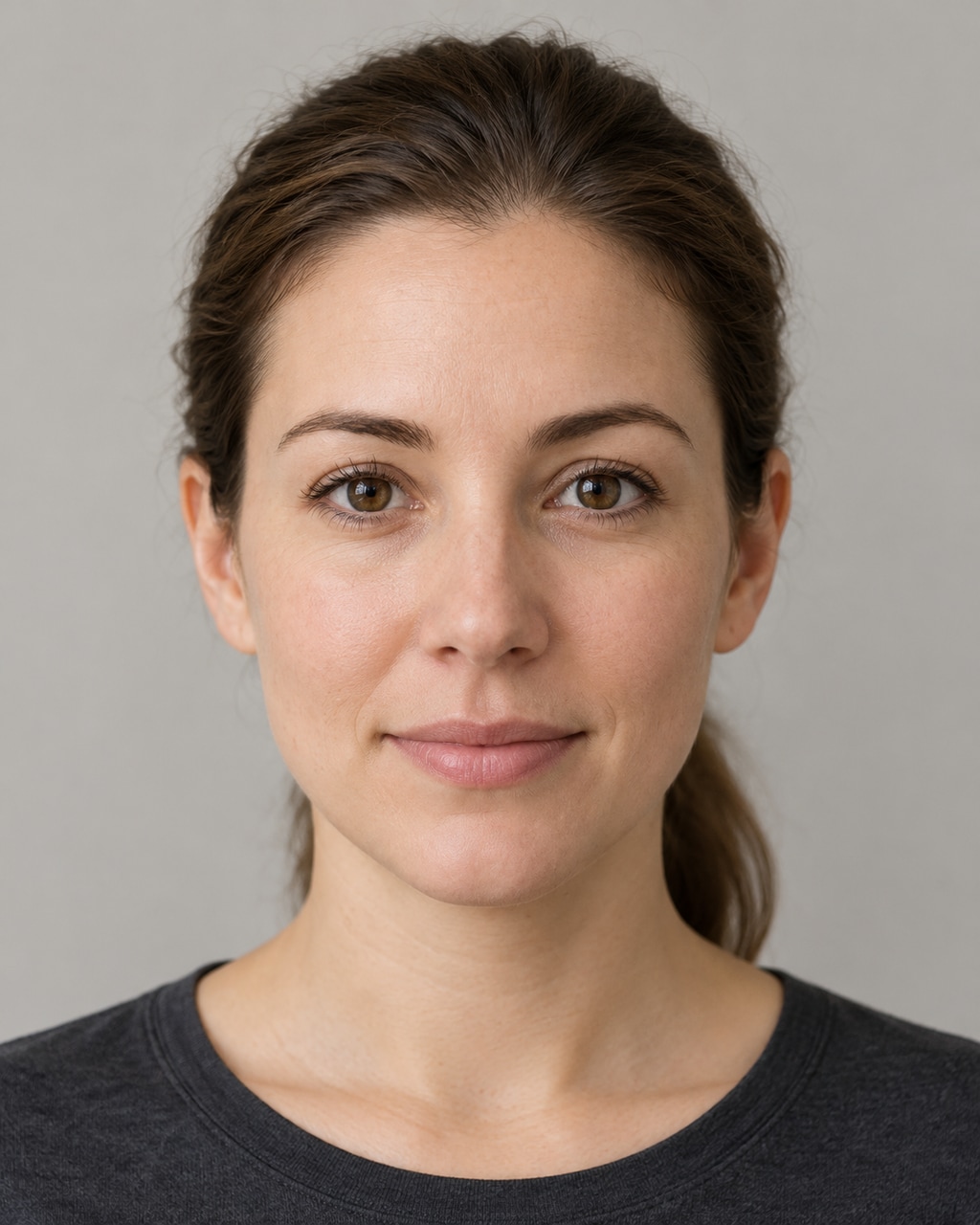
Inner-eye gap compared with average eye width
Use a clear, front-facing portrait. Upload a photo or take one with your camera.
The scan maps 478 points and turns them into proportions, alignment and a face score.
Read your free result, share a card, or open the complete report and personal plan.
Compare a look on your own photo, choose a practical first step, and keep a plan you can use. 26 readings across five facial regions supply the evidence.
Follow the measurements from your photo to a clear explanation.
Explore six personal hairstyle concepts, then choose the framing you prefer.
Build a plan around your goals, time and preferred budget.
Full web report + downloadable PDF · no subscription
Explore a complete exampleLive measurements · example portrait
Six dimensions show how your photo’s measurements fit together.
The actual spans behind a reading
Explore every featureAn overall face rating or a closer look at one feature. Choose your starting point and get a free first result.
Explore what a photo score says—and what people may see differently.
Try this free toolFind an outline estimate and inspect the ratios that produced it.
Try this free toolCompare two measured proportions with phi, without a beauty percentage.
Try this free toolInterpret a PSL score against its named scale, without uploading a photo.
Explore psl scaleCheck twelve left/right pairs and see their alignment on your photo.
Explore face symmetry testMeasure each eye-corner angle and understand its direction.
Explore canthal tilt calculatorInspect five facial ratios and three visible vertical bands.
Explore facial proportions calculatorInspect frontal jaw width, paired contours and a declared balance score.
Explore jawline ratingSee the kind of detail you’ll receive. These excerpts use the same measurements and plan builder as your own report.
Read the full sample reportOne portrait. Six personal hairstyle concepts. Compare each with the original, save your favorites, and take a clearer idea to your stylist.
Explore all six looksActual GPT Image 2.5 Sunburst · High edits of the same AI-created adult example. Six personal images are included in your Face Report; AI can change facial details. Example source: FaceRater · AI-created example.

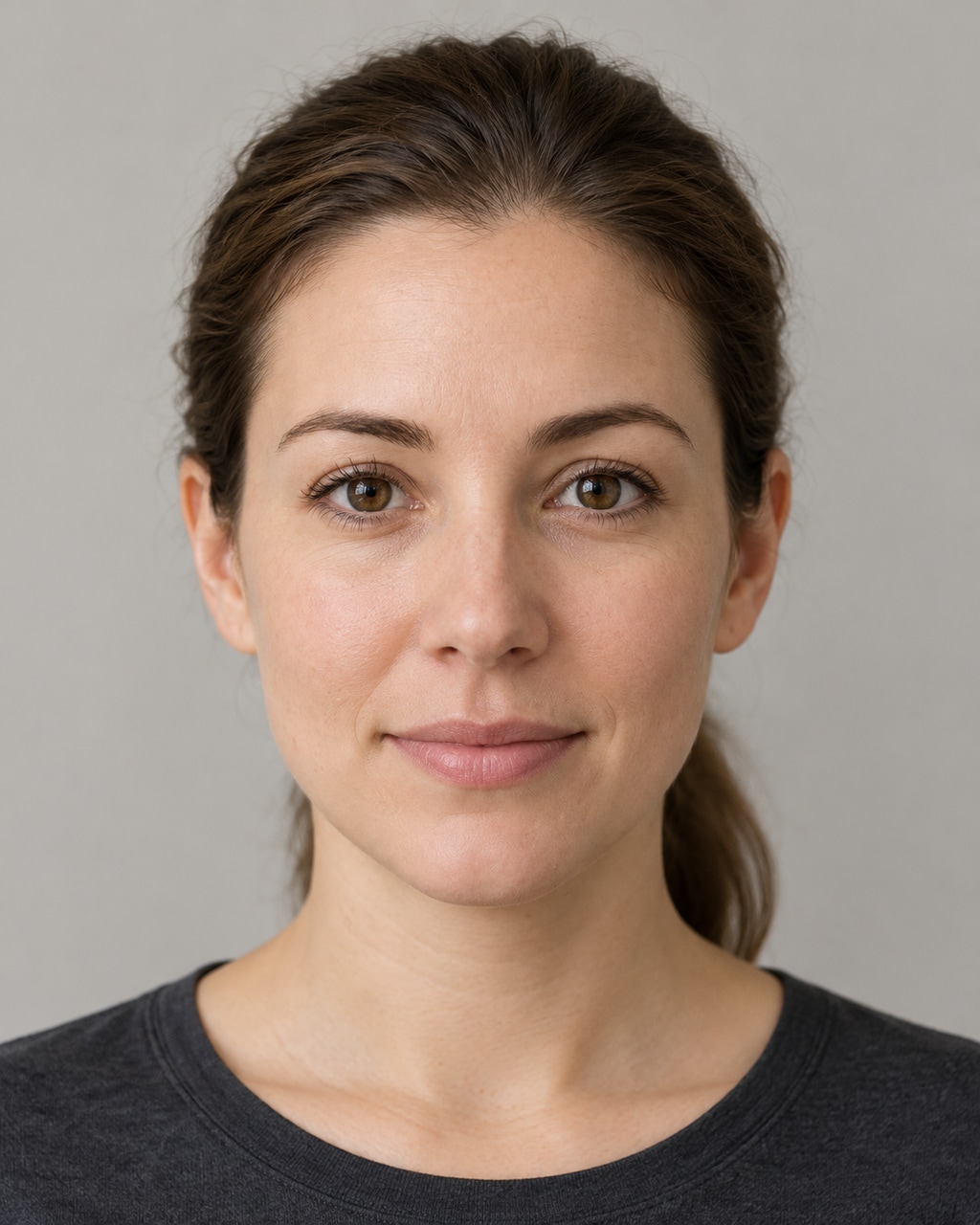
Your first result, open readings and a share card.
Start your free scan →26 readings, five visual chapters, six AI hairstyles, a personal plan and PDF.
Explore your full report →New report checkout is temporarily unavailable. Free scans, the complete sample and saved reports remain available.
Choose the question you want to explore. The definitions, examples and research are here when you need them.
FaceRater combines a face landmark detector with a declared geometry calculation. It turns one portrait into readable measurements rather than asking you to trust an unexplained number.
MediaPipe Face Landmarker supplies predicted feature positions. FaceRater computes ratios, angles and paired differences from those coordinates. The detector does not supply a universal attractiveness verdict; the scoring choices belong to the documented FaceRater formula.
Read how the measurements work ↗Open a free reading to see its numerator, denominator or reference line on your original photo. The diagram helps you check whether the detector followed a visible feature, and whether a number answers the question you actually came with.
The same scan can support focused views of face shape, symmetry, canthal tilt, facial ratios, golden-ratio comparisons and jaw balance. Those views select relevant measurements. They do not claim that each search term requires a new beauty model.
A portrait is a particular capture of a person. Research provides context for that limitation, while FaceRater’s own documentation explains how its product score is calculated.
Jenkins and colleagues studied variation among images of the same people in four experiments. The finding motivates checking capture conditions before reading a change in a photo result as a change in the person.
Keep camera height, distance, expression and light similar when comparing a styling choice. If one feature was obscured in the first portrait, improve visibility before interpreting the difference between two numerical outputs.
A width ratio describes selected visible spans; an angle describes a line against a reference. Neither establishes personality, health or a population rank. Use the part of the report that answers your question and leave broader judgments to context.
Sources: Jenkins et al. (2011) · Variability in photos of the same face
These answers explain the face rater’s cost, calculation, privacy and report options. Start with the sample if you want to inspect the experience before choosing a photo.
The geometry score and four initial readings are free, with no customer account or card required. Each focused tool states its free outputs before you choose a photo. A complete Face Report is optional and separately priced.
An on-device landmark detector predicts feature positions. FaceRater then calculates named ratios and paired differences and combines six dimensions with declared weights. The report shows geometry-v1.1 so you can identify the formula. It is a product geometry score, not a detector-generated beauty verdict or a measured population percentile.
Your free report includes the overall geometry score, visible face shape and four open readings. Switch photo layers to inspect landmarks, eye geometry, jaw contours and left–right alignment. Open a reading to see the measured feature, then create a share card or explore the complete sample report.
Distance, head pose, expression, visibility and the detector’s predicted points can change the measured geometry. Start by checking the photo and the spans behind the changed dimension. Use matched capture conditions for comparison. A small score movement should not be read automatically as a physical change or a change in real-life attractiveness.
Yes. Open the AI-created adult sample to explore a measured report, including the full report sections and original-photo diagrams. It demonstrates the actual calculation and interaction rather than a customer testimonial. You can inspect the sample without scanning a personal photo, creating a customer account or making a payment.
It opens all 26 measured readings, five explained facial regions, six AI hairstyle concepts, a personal styling plan based on your selected preferences and PDF export. The underlying geometry score does not become more accurate because you pay. Review the complete sample and the pricing page to decide whether the extra interpretation and organization would help.
MediaPipe maps 478 landmarks on your device. FaceRater calculates the readings with its geometry formula, then combines related measurements and capture warnings into regional interpretations, hair-framing and eyewear comparisons, manual color pairings and a personal styling plan around your selected preferences. You can compare a second photo on-device in the complete web report; this temporary comparison is not saved or included in the PDF. Six personal Sunburst High hairstyle concepts are generated separately when you request them. The report text is not written by a generative AI model.
Written and reviewed by FaceRater · . Research provides context; it does not validate our scoring formula. Product definitions and limitations are explained in the measurement method.
Detector documentation; supports landmark capability, not a beauty-score claim.
Four experiments on variation between photographs of the same people. This supports reading a photograph in context; it does not establish our score accuracy.
Start with a free scan. Explore the complete report when you want the full picture.
Or start with your free result